Monogram dishwasher service
Start with the behavior of the appliance.
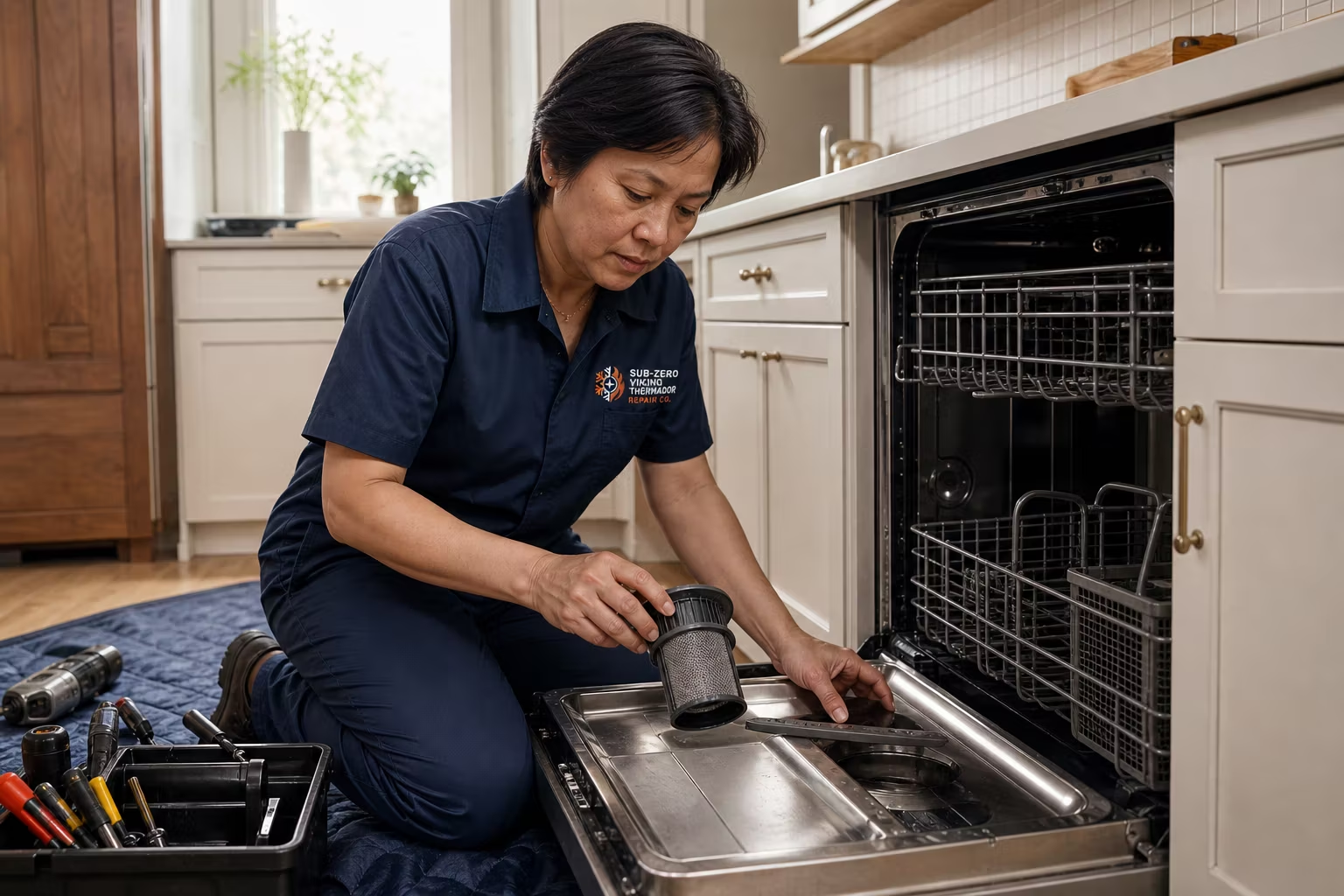
Monogram dishwasher service traces the symptom through fill, wash, drain and dry. Installation, door alignment and hose routing can matter alongside pumps, heaters, sensors and controls, particularly in integrated kitchens.
A dishwasher cycle has distinct fill, wash, drain and dry stages. Knowing where the cycle stops—and whether an error, leak or unusual sound occurs—provides more useful direction than the broad statement that the dishwasher is not working.
We review operating history, installation conditions, controls and the subsystem connected to the complaint. For cooling equipment that can mean temperatures, airflow, doors and defrost behavior; for cooking it can mean heat delivery and sensing; for dishwashers it can mean fill, wash, drain and dry performance.
Service information published by Sub-Zero Viking Thermador Repair Co. · Last reviewed August 31, 2026.
Symptom guide
What owners notice—and what is useful to record.
A symptom narrows the investigation, but it rarely identifies a component by itself. Note when the behavior begins, whether it is constant or intermittent, and what changed immediately before it appeared.
- Dishwasher will not startNote whether the panel is completely inactive or the cycle refuses to begin after the door is closed.
- Water remains after the cycleStanding water at the end of a cycle is different from a unit that never filled; report the stage and any pump sound.
- Dishes are not cleaning or dryingCheck loading, detergent and the owner-accessible filter before concluding that a wash or dry component has failed.
- Leak appears at the door or baseStop the cycle for active leakage and note whether water appears at the door, supply connection or beneath the machine.
- Unit displays an error codeSave the full code and the point in the cycle when it appears before resetting the appliance.
Systems that may need diagnosis
The exact test sequence depends on the model and complaint. These are diagnostic areas, not a list of assumed failed parts.
- Drain, pump or water-inlet problem
- Door latch or seal fault
- Heating or drying-system issue
- Sensor, control or wiring problem
Safe checks before service
These checks stay outside sealed panels and do not require tools. Stop if the appliance is leaking, overheating, sparking or creating a gas or electrical odor.
- Confirm the door is latched
- Clean only the owner-accessible filter
- Check that a tall item is not blocking the spray arm
- Stop the cycle if water is leaking onto the floor
When to schedule
When professional diagnosis makes sense.
Turn off the cycle and water supply for an active leak. Arrange service when the machine repeatedly fails to fill or drain, the door will not latch, electrical odor appears, or cleaning and drying remain poor after owner-accessible filters and loading are checked.
Diagnosis follows the cycle stage connected to the complaint. The door and latch, water entry, circulation, drainage, heating, sensors and controls are reviewed as applicable, along with installation conditions that can affect hoses or door alignment.
Repair recommendations depend on the verified cause, appliance condition, access and availability of the correct model-specific parts. A service request is not an automatic promise that a particular part or same-day completion will be available.
Diagnostic process
A system-by-system visit, not a symptom guess.
The process is adapted to the appliance, but the sequence remains clear so the owner understands how the conclusion was reached.
Document the complaint
Review settings, operating history, error messages and the exact point in the cycle where behavior changes.
Check installation and safety
Inspect relevant doors, airflow, utilities, clearances and accessible connections before internal testing.
Test the relevant system
Use observations and measurements appropriate to this dishwasher and the reported symptom.
Explain the finding
Review the probable cause, repair path and any model-specific parts or access considerations before proceeding.
Chicago service area
Local Monogram dishwasher service near Lakeview.
Appointments are dispatched from 3478 N Broadway, Chicago, IL 60657. The regular service radius is approximately five miles and includes Lakeview, Wrigleyville, Northalsted, Lincoln Park, Uptown, North Center, Roscoe Village, Ravenswood, DePaul and the Gold Coast.
Customers in condos and multi-unit buildings should include elevator, loading, parking or front-desk requirements when scheduling. Mobile service is performed at the appliance location; neighborhood pages describe coverage and are not separate offices.
Review neighborhood coverage →Practical answers
Monogram Dishwasher repair FAQ
Answers are general because the exact model, installation and measured condition determine the repair.
What information should I provide when scheduling?
Share the Monogram model number when safely accessible, the complete symptom, when it began, any displayed error and whether the appliance is built in or panel-ready. Photos of a visible leak or installation can help with planning.
When should I stop using the appliance?
Turn off the cycle and water supply for an active leak. Arrange service when the machine repeatedly fails to fill or drain, the door will not latch, electrical odor appears, or cleaning and drying remain poor after owner-accessible filters and loading are checked.
Can you diagnose the problem from an error code?
An error code is useful context, but it is not a complete diagnosis. The code, operating condition and relevant components still need to be checked on the appliance before a repair is recommended.
Is repair completed during the first visit?
The first priority is an accurate diagnosis. Completion depends on the finding, safe access and parts availability for the exact model. The next step is explained before repair work moves forward.
Which Chicago neighborhoods are covered?
Service is centered on Lakeview and nearby North Side neighborhoods within approximately five miles of 3478 N Broadway, Chicago, IL 60657. Call with your ZIP code if you are near the edge of the service area.
Continue by appliance